
Effective Strategies for Winning in Rainbow Six Siege

How Rainbow Six Siege Pros Actually Win (It’s Not About Aim)Effective Strategies for Winning in Rainbow Six Siege
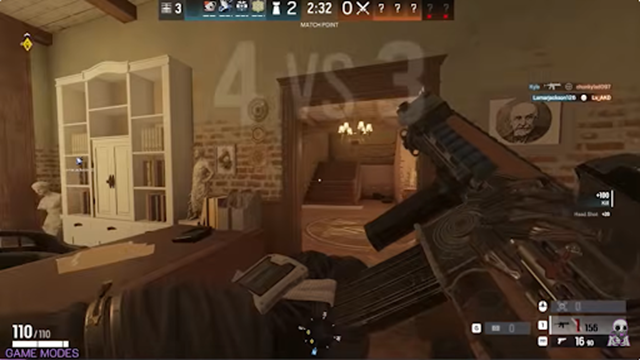
Most players think Rainbow Six Siege is all about landing headshots. They’re wrong.

Watch any pro match and you’ll notice something fascinating. The best players aren’t necessarily the ones with godlike aim. They’re the ones who gather intel first, coordinate operator picks, and control time like chess masters.

Strategy beats raw mechanical skill in Siege. Always has, always will.

That’s why a Bronze player with a good plan can sometimes outplay a Platinum player who relies purely on gunfights. And it’s definitely why professional teams spend hours drilling coordination drills instead of just practicing aim.

Here’s how the pros actually dominate matches.

The Foundation: Intel Wins More Rounds Than Aim

Every successful attack starts the same way. Drone first, push second.

Those first 30 seconds of prep phase? That’s where rounds are won or lost. Professional attackers use that time to spot defender positions, identify weak points in their setup, and mark rotation routes.

The difference between ranked players and pros is simple. Ranked players drone once, then forget about it. Pros treat drones like they’re worth their weight in gold—because they are.

Think about it. Would you rather face an enemy you know is in the corner with a deployable shield, or walk into a room blind? One scenario gives you options. The other gets you killed.

Defenders have their own intel game. Valkyrie’s cameras outside windows. Maestro cams watching flanks. Even bullet holes in soft walls to peek common angles.

The team with better information makes better decisions. Better decisions lead to more round wins. It’s that straightforward.

Operator Synergy Creates Unstoppable Attacks

Random operator picks lose games. Coordinated picks steamroll defenses.

Here’s a classic example. Thermite wants to breach a reinforced wall. But there’s a Bandit battery or Mute jammer blocking him. Enter Thatcher, whose EMPs disable defender gadgets in a huge radius.

Suddenly that “impenetrable” wall is wide open.

The pros take this concept further. They build entire strategies around operator combinations. Hibana breaches from one angle while Buck attacks from above. Defenders split their attention, and somebody dies.

Vertical play amplifies this effect. Buck’s skeleton key shotgun can open floors and ceilings, forcing defenders to watch multiple angles simultaneously. Nobody can hold five angles at once.

Even if you’re not coordinating with a full squad, understanding which operators complement each other helps. Bringing Thatcher when someone picks Thermite makes sense. Picking a second hard breacher when the first one fails? That’s game sense.

Some players take this to extremes and use tools like Battlelog’s Rainbow Six Siege hacks with aimbot to guarantee kills after getting position, though that’s obviously controversial and carries ban risks.

Time Management Separates Winners From Losers

Every round has three phases, and understanding them changes everything.

The first 30 seconds belong to preparation and intel gathering. Attackers drone. Defenders reinforce and place gadgets. Nobody should be taking gunfights yet.

The middle phase is execution time. Attackers clear rooms and push toward bomb sites. Defenders hold angles and waste attacker time. This is where strategies either work or fall apart.

The endgame is pure chaos. Time’s running out. Attackers need to plant the defuser. Defenders need to deny that plant or defuse if it goes down.

Professional attackers plant fast. They don’t wait until there’s 30 seconds left and then panic. They get map control, clear defenders, and plant with enough time to actually defend it.

Defenders play the opposite game. They want to waste as much attacker time as possible. Force them to drone every room. Make them clear every angle. Run the clock down until attackers have to rush.

Rushed attacks are sloppy attacks. Sloppy attacks get people killed.

Positioning Beats Aim in Most Gunfights

Here’s something nobody wants to hear. Better positioning wins more gunfights than better aim.

A player holding a tight angle with cover will beat a player with better aim who’s exposed in the open. Every single time. Because the player with cover only needs to land one headshot. The exposed player needs to be perfect.

Isolating fights makes this even more powerful. Pro players avoid situations where they’re exposed to multiple angles. They peek one angle, take that fight, then reposition.

Fighting two enemies simultaneously? That’s how you die. Even if you win, you probably traded, and trades usually favor defenders.

The neck-shoulder trick helps too. Most players aim at head height, but recoil pulls weapons up. Aiming slightly lower—at the neck or upper torso—means recoil carries bullets into the head naturally.

Still, positioning matters more. A bad angle with perfect aim loses to a good angle with decent aim.

Team Coordination Multiplies Individual Skill

Solo queue warriors eventually hit a wall. The wall is called teamwork.

Refrags demonstrate this perfectly. One teammate peeks and gets killed. The second teammate immediately swings that same angle and trades the kill. The attacking team loses zero players overall.

Without coordination, that first death is just a death. With coordination, it’s information and an opportunity.

Even without voice chat, smart players use the ping system. Yellow outlines mark enemy positions. White outlines show important gadgets. These callouts help teammates make decisions.

Utility coordination matters too. One player throws a flashbang while another pushes. Or someone creates noise on one side of the map while teammates push the other side.

Defenders need this even more. Roaming works best when anchors know where roamers are. Communication prevents teammates from shooting each other during rotations.

Bomb Mode Teaches Everything Important

Casual modes are fine for warming up. But Bomb mode is where actual strategy happens.

Attackers need to plant the defuser on one of two sites, then prevent defenders from defusing it. That simple objective creates incredibly complex scenarios.

Where to plant matters. Planting in the open gets you killed during the animation. Planting in a corner with cover lets you defend it from a strong position.

Defenders fortify bomb sites, deny plants through gadget placement and position, and try to waste attacker time. If the defuser goes down, they need to reach it and hold the area long enough to defuse.

These dynamics teach everything. Map control. Time management. Trading kills. Using utility. All the core skills that make players better.

Starting With The Right Operators

New players often pick operators randomly. That’s a mistake.

Some operators are universally useful. Thermite and Thatcher combo works on almost every map. Valkyrie’s cameras provide intel anywhere. Buck’s vertical play creates opportunities constantly.

These picks are safe because they fit multiple strategies. As understanding deepens, experimenting with specialized operators makes sense. But starting with versatile operators builds good habits.

The worst thing new players do? Picking five roamers on defense or five entry fraggers on attack. Balanced team composition matters more than everyone playing their “favorite” operator.

Practice The Right Way

Playing more matches doesn’t automatically build skill. Practicing deliberately does.

Unranked mode is perfect for trying new strategies without rank pressure. Training grounds help with aim and operator gadget familiarity. Custom games let teams practice specific executions.

The key is focusing on specific skills. One session might emphasize drone usage. Another focuses on vertical play angles. Scattered practice produces scattered results.

Professional teams review their matches afterward. They watch rounds they lost and identify mistakes. Where did intel gathering fail? Which operator synergies didn’t work? What positioning errors led to deaths?

That feedback loop – try strategy, review results, adjust approach—accelerates improvement faster than just grinding matches.

Rainbow Six Siege rewards smart play over flashy aim. Understanding that changes everything about how you approach matches. Master the fundamentals, coordinate with teammates, and watch your win rate climb.

Frequently Asked Questions on fixturesults.com

What are the Pools Fixtures?

The pools classic fixtures is the official list of football matches compiled and arranged, typically released weekly and numbering fixtures from 1 to 49. Each number corresponds to a specific game scheduled for that week, serving as a basis for compilers and forecasters to analyze draws, bankers, pairs, and sequences. This week’s pool fixtures is updated based on games scheduled in English, Scottish, and Australian leagues (and sometimes other competitions). These fixtures provide the raw data needed for all forms of analysis, from compilers’ research to systems like RSK Papers, Late News Papers, and forecasting keys. Without fixtures, punters would lack the foundation for any banker or draw forecast, as every prediction originates from the numbers assigned to these matches.


What are the Pools Results?

The football pools results is the official record of the outcomes of the weekly pools fixtures after all scheduled football matches have been played. These results serve as the final confirmation for which forecast predictions were accurate and which were not. Every week, punters, compilers, and forecasters analyze the pool result to assess the success of their strategies. It is the ultimate proof of accuracy, demonstrating which draws were valid, which pairs worked, and which sequences delivered. In essence, the pool result is the “answer sheet” of football pools, providing clarity and direction for punters.


The Football Pools: Fixtures and Results

In the world of the football pools, few tools are as vital and reliable as the classic pools fixtures and results. While forecasts and fixtures form the foundation of pool analysis, it is the weekly pool results that validates every prediction and reveals the accuracy of compilers, forecasters, and systems. For punters seeking consistency and success, mastering the use of pool results is essential for improving their chances of winning. This article provides clarity for what pool results and fixtures entail, their role in draw forecasts and predictions, the importance of advance pool fixtures, current scores and results, and how punters can maximize their use for consistent success.


The Football Pools Panel in Deciding Postponed (P-P) Matches

In the realm of the football pools, every match result matters. However, when a listed fixture is postponed due to unforeseen circumstances, the Football Pools Panel steps in. A postponed match (PP) is any scheduled game that does not occur within the official coupon weekend, often due to weather disruptions, safety concerns, or fixture congestion. Since such matches cannot yield real on-field results, the task of determining their outcomes falls to the Football Pools Panel, an independent body established to maintain fairness and consistency in pool results. The Pools Panel consists of seasoned football experts, former players, referees, coaches, and administrators, who possess deep knowledge of the game. When a postponement occurs, the Panel convenes (typically on the Saturday or Sunday of that coupon week) to analyze team form, strength, home advantage, injuries, and other relevant factors. Based on their judgment, they assign one of three possible results: Home Win, Draw, or Away Win. These outcomes are final and binding across all licensed football pool operators, ensuring that postponed fixtures do not disrupt coupon settlements or stakers’ potential winnings. In summary, the Pools Panel acts as the final authority for postponed matches, guaranteeing continuity and fairness in every coupon week, regardless of whether the ball has been kicked.


What Happens If a Football Pools Match (Fixture) Is Abandoned?

Abandoned matches are one of the most confusing scenarios in football pools betting. Whether it’s due to extreme weather, player injuries, crowd disturbances, or unexpected events like a pandemic, a match that doesn’t go as planned raises one crucial question for bettors:

What Will Happen If a Match Is Abandoned?

If a match is abandoned, the score at the time of abandonment becomes the final result and is recorded as FT for pool results. Note that bookmaker policies may differ, and some coupons may void the match.

Match Abandoned vs Match Postponed

It’s important to make this distinction early on because a match that has been abandoned is a very different beast to one that has been postponed, and this classification will have a bearing on how your bet plays out.

An abandoned match is one that has started but cannot finish for whatever reason. There can be any number of reasons why this happens, but as soon as a ball is kicked, hit, or thrown, it is classed as abandoned if it ends prematurely thereafter.

A postponed match is one that is rescheduled for another date before the game has begun or any action has taken place. In this instance your bet could be void or it could be held over until the match is actually played – all bookies tend to have different rules on postponed matches, so check their terms and conditions for more information.


Key Football Pool Terms You Should Know

LKO (Late Kick-Off): Refers to matches that begin later than the standard Saturday 3:00 PM kickoff time. These games remain valid for that coupon week as long as they are completed the same day.

EKO (Early Kick-Off): Denotes fixtures that start earlier than the regular schedule. Early kick-offs are often televised games and are officially recognized in the pool results.

Monday Matches: Occasionally, certain fixtures are played on Mondays following the weekend schedule. Their results still count for the same week’s draw compilation.

Score Draw and No Score Draw: These terms denote a draw result, when both teams finish level at full time. Score draws is when the match ends with goals by both teams and no Score Draw is the reverse. In pool analysis, draws are the cornerstone of winning lines, and identifying them is central to every staker’s strategy.

Void: Occasionally, certain fixtures are played on Fridays ahead of the weekend schedule. Their results are included on some coupons but treated as void on others. Please read the rules carefully before placing your stake with any bookmaker or pools agent.


The Importance of Advance Pool Fixtures

Beyond the weekly fixtures, punters also rely heavily on advance pool fixtures, which provide a list of games for the following week. The advance fixture is a crucial forecasting tool because it allows punters to begin their research before the official week arrives. Here’s why advance pool fixtures are important:

  • Early Preparation: Forecasters can start analyzing banker draws and pairs ahead of time.
  • Spotting Sequences: Many forecasting strategies depend on the relationship between advance fixtures and the current week’s fixtures.
  • Reduces Pressure: With a sense of upcoming games, punters can plan calmly instead of rushing at the last minute.
  • Stronger Accuracy: Studying the advance pool fixture helps in identifying long-term patterns, thereby increasing prediction accuracy. Indeed, some of the most reliable forecasting strategies depend on studying the advance pool fixture alongside the current week’s fixture to identify repeating sequences.


How to Use the Pools Fixtures Effectively

While having access to the fixture is essential, knowing how to use it effectively is crucial. Many punters struggle because they merely glance at the fixture numbers without applying strategic analysis. To succeed, punters must learn to study fixtures like compilers do. Here are effective ways to utilize pool fixtures:

  • Study Fixture Numbers Weekly: Always take time to review how the 1–49 fixtures are arranged for that week.
  • Compare with Past Fixtures: Historical fixture patterns often reveal hidden sequences that can aid forecasting.
  • Look for Repeated Games: When the same teams appear in similar fixture positions across weeks, it may signal a possible draw.
  • Combine Fixtures with Forecast Papers: Use fixture charts together with RSK Papers, Late News Papers, and compiler keys for improved accuracy.
  • Leverage on Advance Fixtures: Start your weekly research early by analyzing the advance classic pools fixtures alongside the current week’s chart. By consistently applying these steps, punters can maximize the value of pool fixtures and enhance their success rate in forecasting.


fixturesults.com Summary

In the football pools, the pools fixtures and results is the heartbeat of the football pools. It defines how draws are predicted, how bankers are confirmed, and how pairs are identified. Without fixtures, there would be no pool forecast, making them the most essential resource for punters. The advance pool fixtures also plays a vital role in preparing punters ahead of the week, giving them a head start in research and reducing last-minute errors. More importantly, punters who learn to use pool fixtures effectively can uncover hidden patterns, refine their predictions, and achieve greater consistency in their winnings. For anyone serious about football pools forecasting, mastering the pool fixtures and advance pool fixtures is not optional, it is the first step toward long-term success and the football pools results confirms and provides clarity for the week of play.